Whether you operate a construction firm in Ontario, a logistics fleet in Alberta, a restaurant in British Columbia, or a manufacturing plant in Quebec, equipment is the heartbeat of your operations. However, purchasing commercial machinery, heavy vehicles, or specialized
medical and industrial tools outright requires significant capital outlays that can drain your cash reserves.
Rather than tying up valuable capital in cash purchases, forward-thinking Canadian entrepreneurs rely on equipment financing and leasing.
Equipment financing allows you to acquire the machinery you need today while spreading the cost over its useful operational life. By leveraging the equipment itself as security, your business can protect cash flow, access tax advantages, and scale without financial strain.
Here is your complete guide to how equipment financing works in Canada, what options exist, and how to get approved.
1. How Equipment Financing Works in Canada
Equipment financing is a specialized form of commercial funding where the machinery, vehicle, or technology you are acquiring serves as the underlying collateral for the transaction. Because the equipment secures the financing, underwriters take on significantly less risk
than they would with non-collateralized funding options like unsecured business loans in Canada.
Key Features of Equipment Loans:
2. What Types of Business Equipment Can Be Financed?
If an asset is tangible, essential to operations, and holds depreciation value, chances are it can be financed. Canadian lenders regularly fund equipment across a wide range of industries, including:
- Construction & Heavy Machinery: Excavators, bulldozers, cranes, skid steers, and pavers.
- Transportation & Logistics: Semi-trucks, trailers, delivery vans, and fleet vehicles.
- Manufacturing & Industrial: CNC machines, automated assembly equipment, packaging tools, and robotics.
- Healthcare & Dental: Diagnostic imaging equipment, dental chairs, laser devices, and lab tech.
- Hospitality & Food Service: Commercial ovens, refrigeration units, point-of-sale systems, and kitchen fit-outs.
3. Prime vs. Subprime Equipment Financing: Where Do You Fit?
In Canada, equipment funding is available across both the Prime Market (traditional chartered banks and credit unions) and the Subprime Market (private lenders and alternative fintech platforms).
The Prime Route (Banks & Government Programs)
If you have pristine credit, strong balance sheets, and a solid financial history, you can apply through a traditional chartered bank or utilize government small business loans in Canada like the Canada Small Business Financing Program (CSBFL). Under the CSBFL, Canadian businesses can access up to $500,000 specifically designated for equipment purchases. However, prime approval requires submitting heavy paperwork, including the full suite of documents needed for a prime business loan (such as two years of T1 personal taxes, T2 corporate tax returns, and CRA Notices of Assessment).
The Subprime Route (Alternative Lenders)
When traditional lenders take weeks to process paperwork or when traditional Canadian banks say no due to credit history or operational age the subprime market offers a streamlined alternative. Private equipment lenders focus primarily on the value of the asset being purchased and your recent bank cash flow. This makes it significantly easier to qualify for a business loan with bad credit, allowing you to secure approvals based on 12 months of clean bank statements and a simple application.
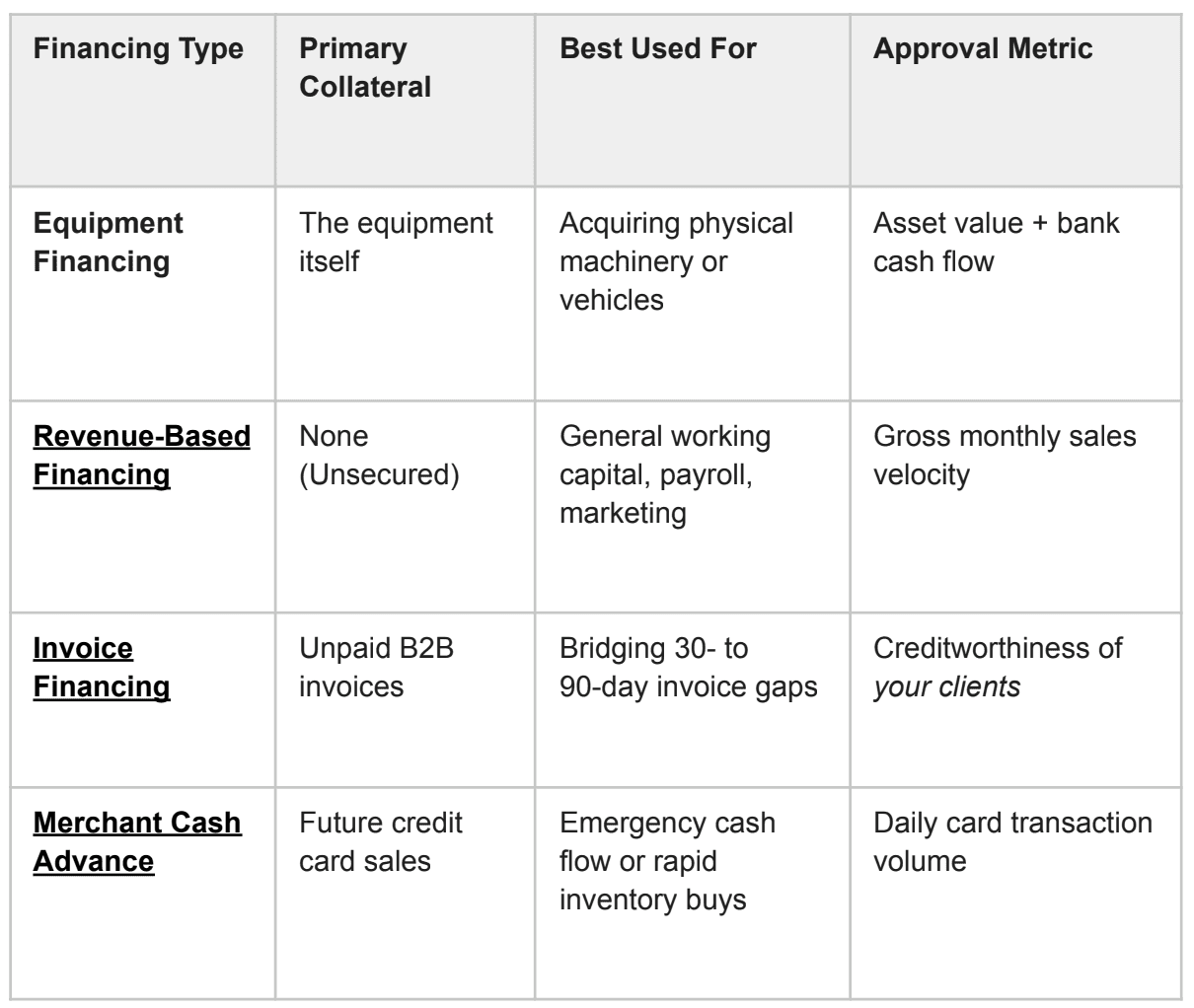
4. Equipment Financing vs. Other Funding Structures
Depending on your financial situation, equipment financing is just one tool in your cash-flow toolkit. Here is how it compares to other common financing products available through alternative lending options in Canada:
5. Unlocking Cash from Assets You Already Own: Equipment Sale-Leasebacks
What if you already own heavy machinery or commercial vehicles outright, but need immediate cash flow to expand your team or buy inventory? Through an Equipment Sale-Leaseback, a private lender evaluates your existing equipment, purchases it from your business for cash, and immediately leases it back to you. You maintain uninterrupted use of your machinery on-site while converting idle equity into
liquid working capital.
Access Unsecured Business Capital in Canada Today
You don't need to mortgage your home or pledge physical machinery to get the capital your enterprise needs to scale. At Greenlight Capital Canada, we evaluate your business based on its actual performance and revenue potential not just physical collateral or credit scores.

Ali Malik
Business Development Manager