

Five Trends Shaping Canada’s Economy and Housing Market
October is here, and we’ve officially entered the final quarter of 2026. As we move into the last few months of the year, Canada’s economy and housing market continue to present a mix of challenges, opportunities and regional differences.
From rising diesel costs and renewed inflationary pressure to softer rents and subdued home sales, several important trends are shaping the financial landscape for homeowners, buyers, investors and businesses.
For clients navigating the mortgage and lending market, understanding these developments can help put current opportunities and challenges into perspective.
Here are five trends to watch this October and what they could mean for your clients.
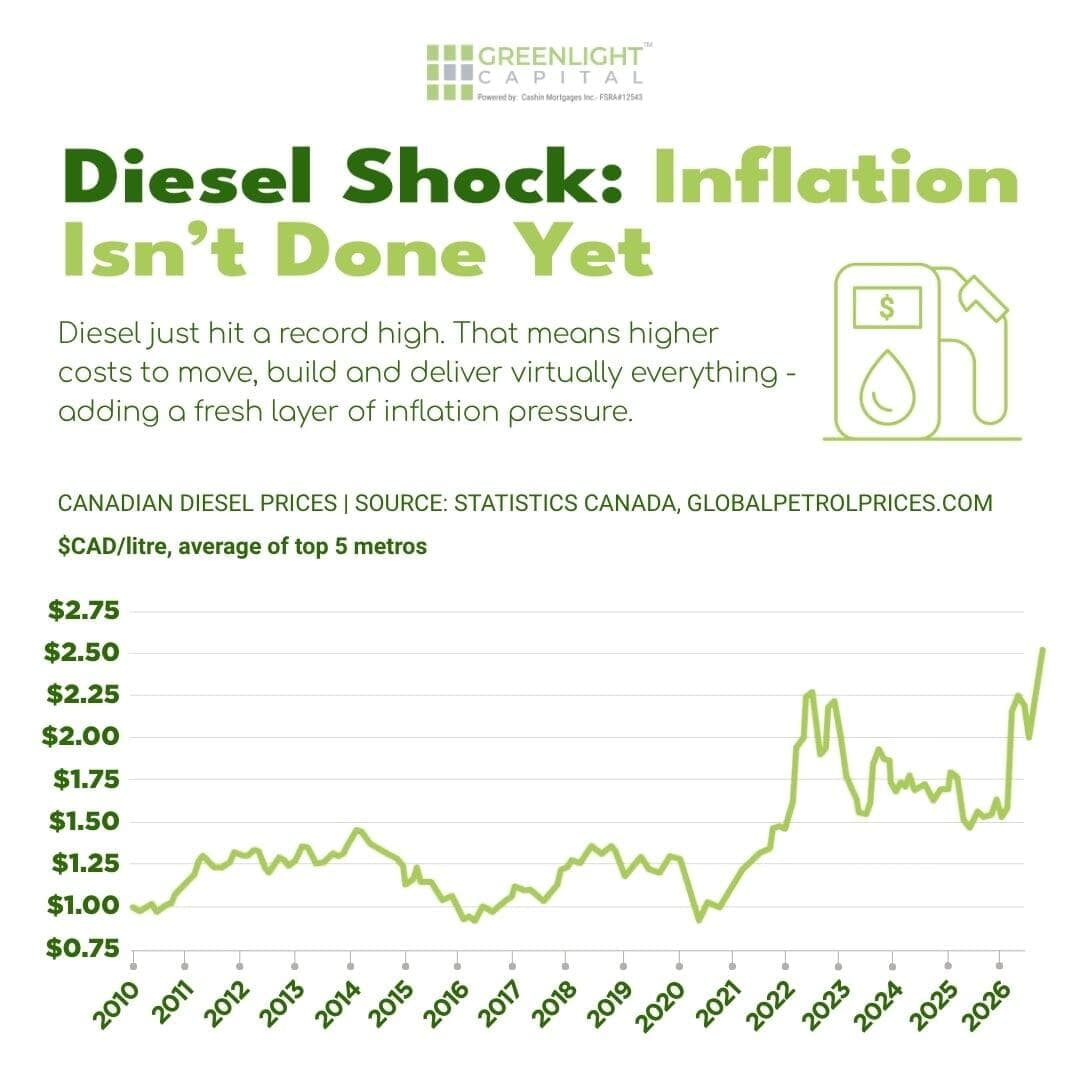
1. Diesel Shock: Inflation Isn’t Done Yet
Diesel prices have reached record levels, adding another layer of inflationary pressure to the Canadian economy.
Diesel plays a significant role in moving goods, operating heavy equipment and supporting industries such as transportation, construction, agriculture and manufacturing. When fuel costs rise, businesses can face higher operating expenses, which can eventually affect the price of goods and services.
This creates another factor for Canadians to watch as inflation remains an important consideration for the economy and interest-rate environment.
What Does This Mean for Your Client?
Higher transportation and operating costs can affect household budgets as well as businesses.
For clients planning renovations, construction projects or major purchases, higher material and transportation costs may increase the overall project budget.
For borrowers and business owners, this is also a reminder to consider cash flow and the total cost of financing, rather than focusing only on the advertised interest rate.
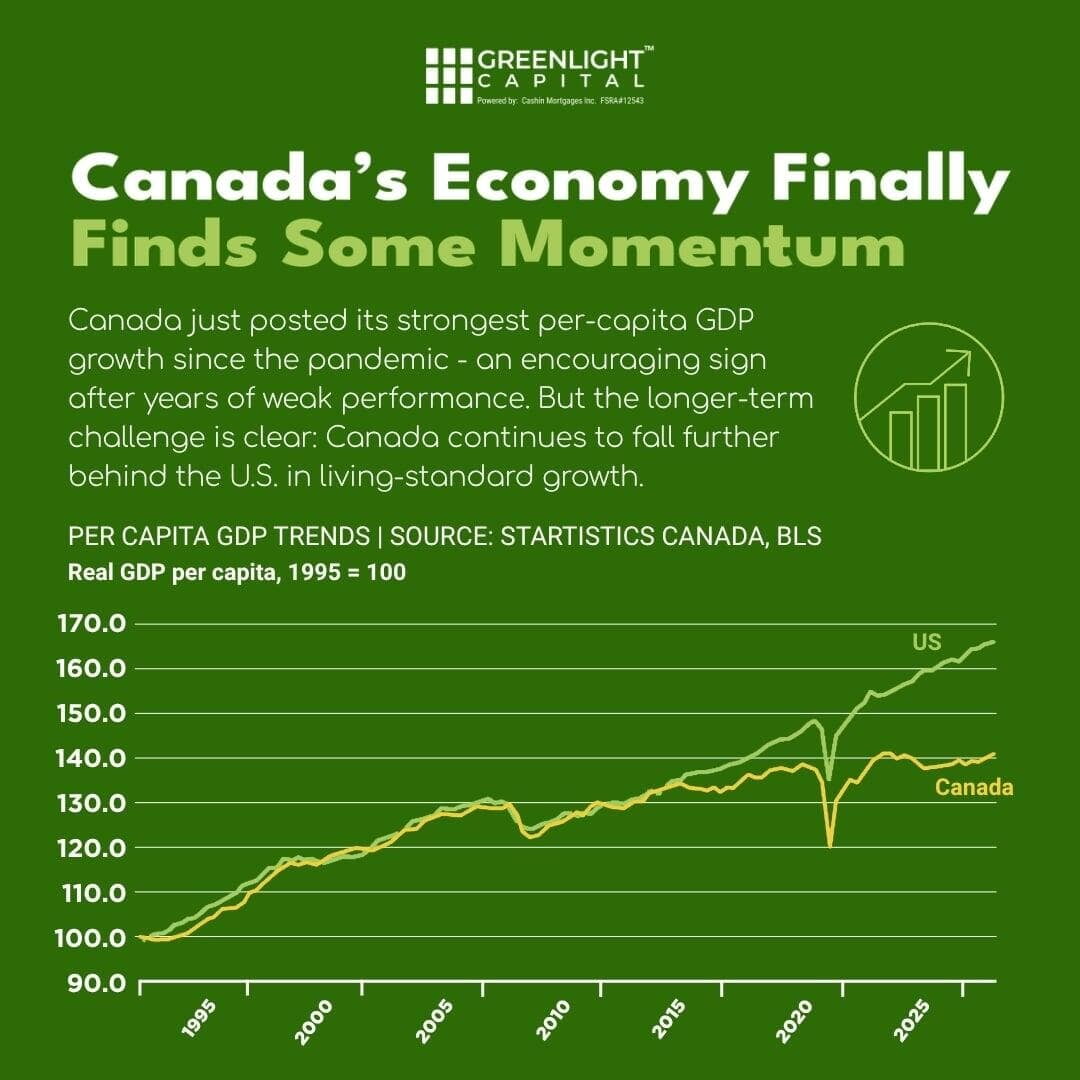
2. Canada’s Economy Finally Finds Some Momentum
There is also some encouraging economic news.
Canada has posted its strongest per-capita GDP growth since the pandemic, providing a positive sign after several years of relatively weak economic performance.
However, the longer-term picture remains mixed. Canada continues to face challenges around productivity and growth in living standards compared with the United States.
Economic growth can influence employment, consumer confidence, business activity and, ultimately, housing demand.
What Does This Mean for Your Client?
A stronger economy can provide support for employment and consumer confidence, which may eventually translate into increased housing activity.
However, economic improvements are not necessarily experienced equally by every household or region.
For clients considering a mortgage, refinance or investment, their income, debt levels, equity and individual financial goals remain more important than any single economic headline.
A stronger economy can provide support for employment and consumer confidence, which may eventually translate into increased housing activity.
However, economic improvements are not necessarily experienced equally by every household or region.
For clients considering a mortgage, refinance or investment, their income, debt levels, equity and individual financial goals remain more important than any single economic headline.
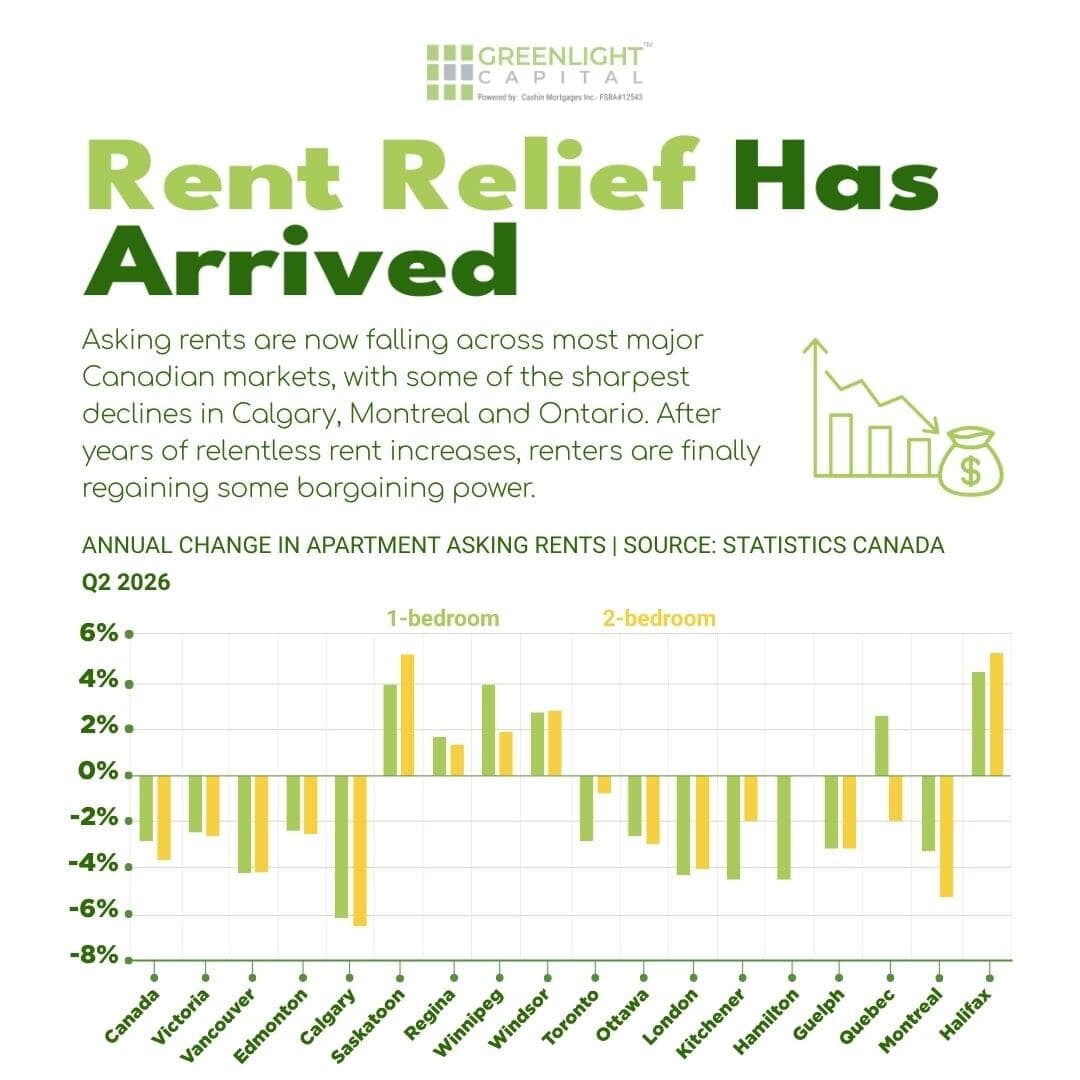
3. Rent Relief Has Arrived
After several years of significant rent increases, renters are finally seeing some relief in a number of Canadian markets.
Asking rents have been declining across several major markets, with notable declines in areas including Calgary, Montreal and Ontario.
For renters, this represents a change from the rapid rent growth experienced in previous years and may provide more negotiating power when searching for a new home.
What Does This Mean for Your Client?
For renters, lower asking rents could potentially reduce monthly housing costs or provide an opportunity to negotiate more favourable rental terms.
For real estate investors, however, falling rents can have a different impact.
Investors should carefully review current local rental rates, vacancy conditions and projected cash flow when evaluating a property. Rental assumptions based on previous market conditions may no longer accurately reflect today's environment.
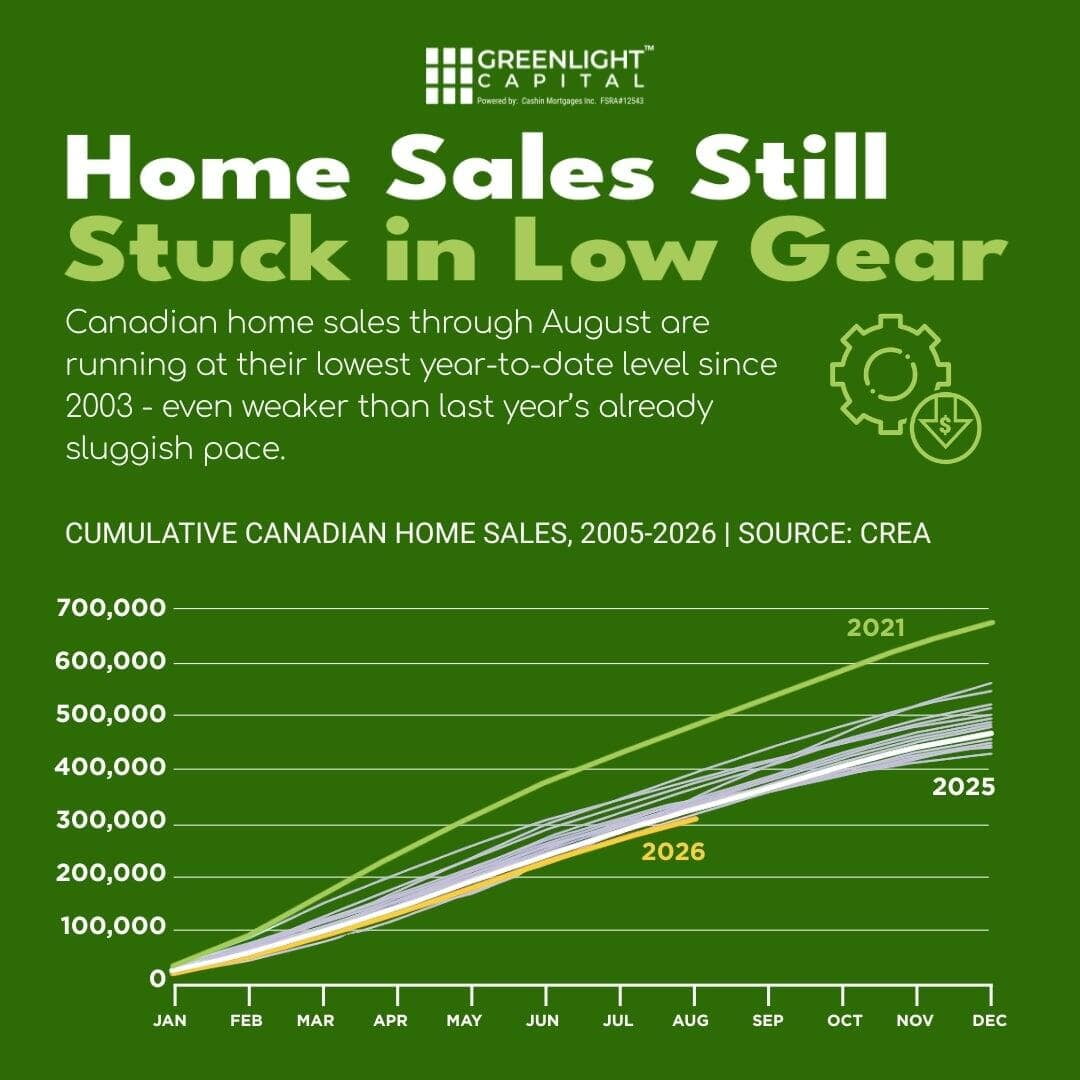
4. Home Sales Are Still Stuck in Low Gear
Canadian home sales remain subdued.
Through August, sales are running below an already sluggish pace from the previous year, highlighting the continued caution among buyers and sellers.
Affordability concerns, borrowing costs and economic uncertainty continue to influence housing decisions across many Canadian markets.
A slower transaction environment doesn't necessarily mean the same thing for every participant in the market.
What Does This Mean for Your Client?
For buyers, a slower market may provide more time to conduct due diligence, compare properties and negotiate.
For homeowners considering selling, understanding current market value is particularly important when determining their next move.
For clients considering refinancing or accessing equity, an updated understanding of their property's value can also help determine what financing options may be available.
For investors, the focus should remain on cash flow, leverage, financing costs and the individual property's fundamentals rather than relying solely on national sales statistics.
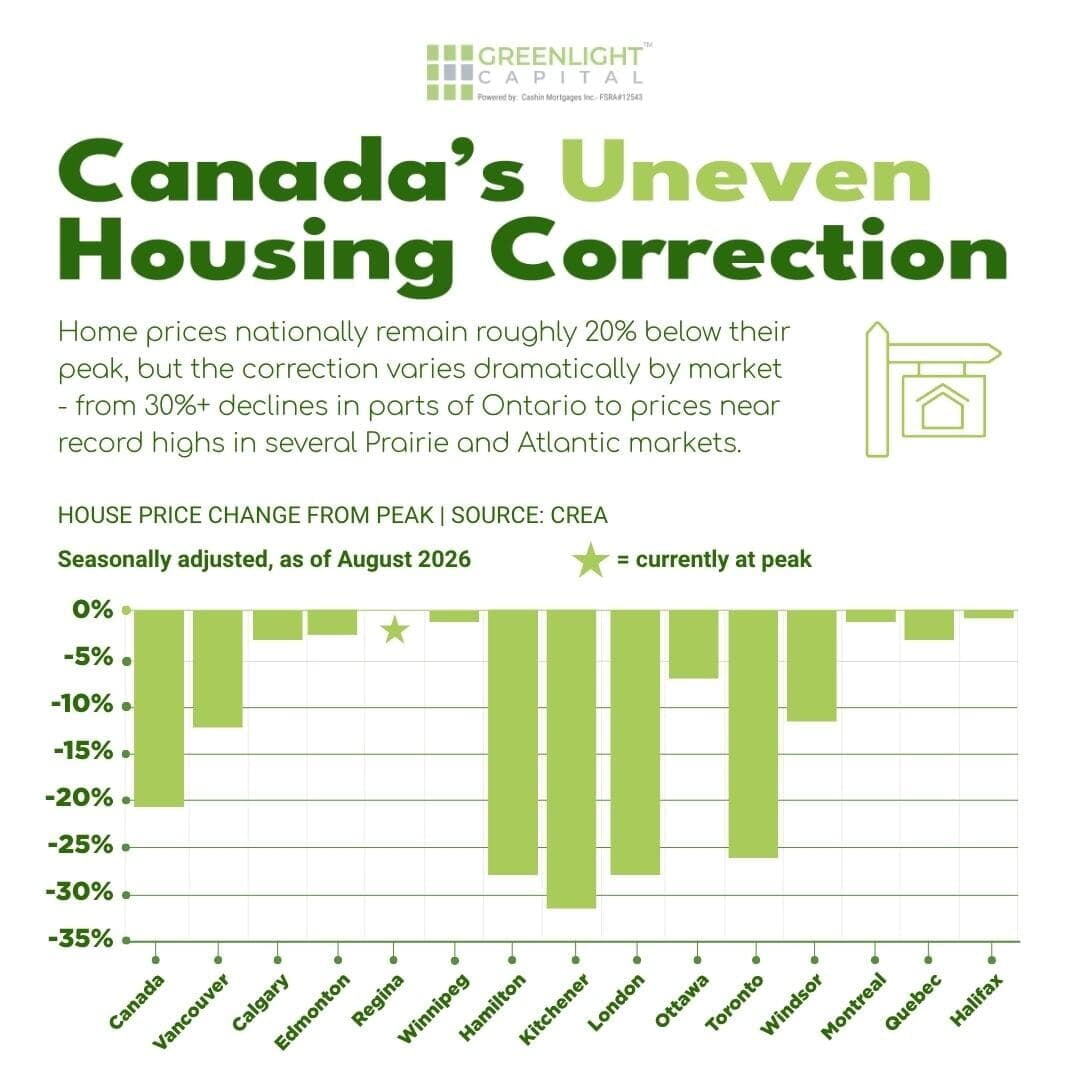
5. Canada’s Housing Correction Remains Uneven
One of the most important things to remember about Canada's housing market is that there isn't one single Canadian housing market.
National home prices remain below their previous peak, but the degree of correction varies significantly by region.
Some markets in Ontario have experienced substantial declines, while several Prairie and Atlantic markets remain much closer to previous record levels.
This regional difference can have a significant impact on homeowners, buyers and investors.
What Does This Mean for Your Clients?
National housing headlines don't always tell the full story.
A client's property value, available equity and borrowing capacity can be significantly different depending on where the property is located.
For homeowners, understanding the local market can help when considering a refinance or home-equity strategy.
For buyers, local conditions can influence affordability and negotiating opportunities.
And for investors, local rental demand, property values and financing conditions should all be considered before making a decision.
National housing headlines don't always tell the full story.
A client's property value, available equity and borrowing capacity can be significantly different depending on where the property is located.
For homeowners, understanding the local market can help when considering a refinance or home-equity strategy.
For buyers, local conditions can influence affordability and negotiating opportunities.
And for investors, local rental demand, property values and financing conditions should all be considered before making a decision.
As we move through the final quarter of 2026, several factors will continue to shape Canada's economic and housing outlook.
As we move through the final quarter of 2026, several factors will continue to shape Canada's economic and housing outlook.
Inflation - Energy and transportation costs will remain important factors to monitor. If higher input costs continue to work their way through the economy, inflation could remain an important consideration.
Interest Rates - Future interest-rate decisions will continue to depend on factors including inflation, economic growth and labour-market conditions.
Housing Activity - Home sales could change as borrowing conditions evolve, but affordability and consumer confidence will continue to influence buyer behaviour.
Regional Housing Markets - The differences between Canadian housing markets are likely to remain important. What happens in Ontario may look very different from what happens in Alberta, Atlantic Canada or other regions.
Financing Options - As some borrowers continue to face affordability or qualification challenges with traditional lending, alternative financing solutions may become an important part of the conversation.
The Bottom Line: One Market, Many Client Situations
As we enter the final quarter of the year, the Canadian market remains difficult to summarize with a single headline.
One client may be looking to purchase a home. Another may be considering a refinance or accessing home equity. An investor may be evaluating a rental property, while a business owner may need financing for growth or working capital.
The right financing strategy starts with understanding the individual client's financial position, objectives and available options.
At Greenlight Capital, we work with borrowers and referral partners to explore financing solutions across a range of situations including home equity, investment properties, refinancing, private lending and alternative financing.
Have a Client Who Needs Options?
Don't let a challenging market stop the conversation.